Air conditioners for balconies: what to consider
Whether you have limited outdoor space or a compact layout, a heat pump can work in your terraced home with the right planning.
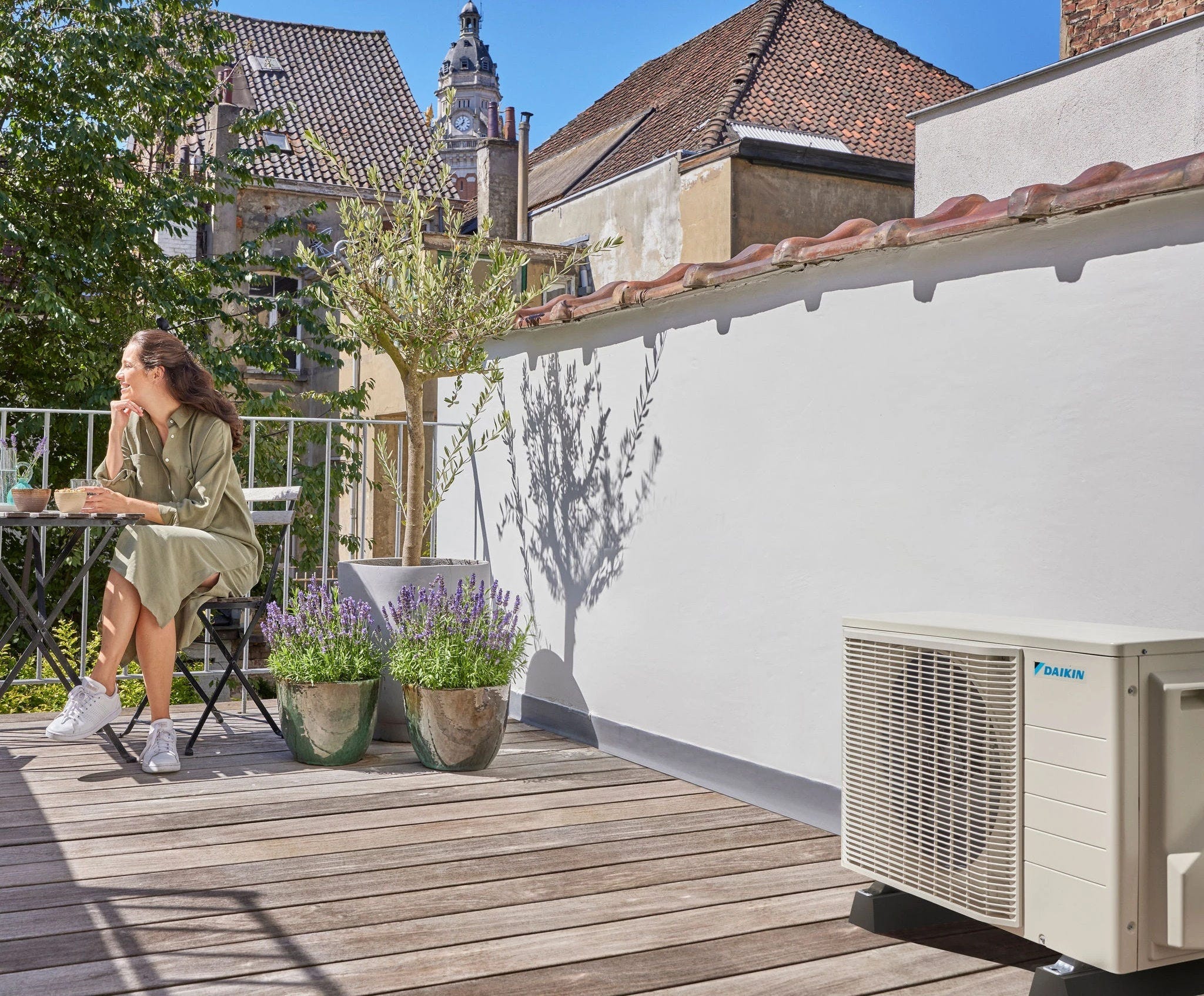
Air conditioners are suitable for all types of homes, including terraced houses, provided that outdoor space, boundary distances and insulation levels are carefully assessed. This guide covers practical considerations from space requirements and regulations through to long-term operation and performance.
Understanding terraced house constraints
Terraced properties present unique installation challenges when it comes to upgrading to an air conditioner. Shared party walls create sensitivity around noise and visual intrusion on neighbours. Outdoor space is often limited to small rear gardens, narrow side passages, or compact courtyards. They can be mounted on an external wall or a flat roof, so they are well worth considering for your terraced property.
How an air conditioner works
Air source heat pumps extract thermal energy from outdoor air and transfer it indoors to provide heating and hot water. A liquid refrigerant absorbs heat from outside, evaporates, then passes through a compressor which raises its temperature before transferring heat to your central heating system.
Heat pumps typically deliver three to four units of heat for every unit of electricity consumed, making them effective even in compact urban properties.
Why a Multi air source heat pump is often the best bet for a terraced house
For terraced properties, Multi air source heat pumps offer distinct advantages. Installation disruption remains minimal, with typical projects completed in two to six days.In the case of using Multi Sytems, there is one outdoor compressor unit that serves multiple indoor units. This works well for where there are restrictions or minimal space..
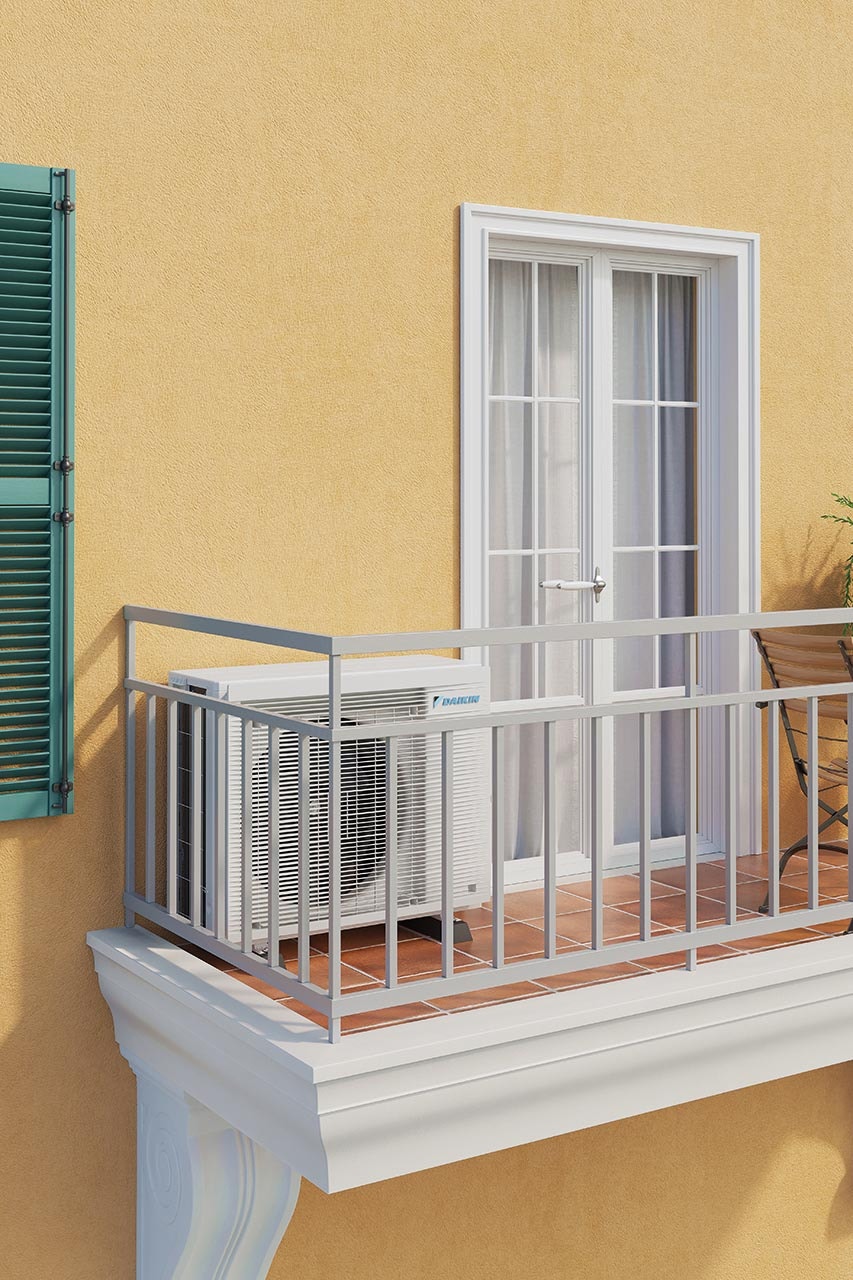
The ability to wall-mount outdoor units when ground space is unavailable provides flexibility.
Insulation and a good base
If you're home is not insulated correctly:
- The air conditioner must work harder
- Electricity bills increase
- Comfort may suffer (rooms feel colder)
Installers assess your home and determine what improvements are needed. Roof insulation, draught reduction, and upgraded glazing all improve performance. Air conditioners can work effectively in homes with reasonable thermal efficiency, though better insulation means lower running costs.
Planning and regulatory considerations for heat pump installation
Installing an air source heat pump in a terraced house is possible without planning permission. More than likely one would need to check with the building owner with regards to the rules in terms of air conditioning installations. Understanding these rules prevents delays, disputes with neighbours, and unexpected costs.
Choosing the right outdoor unit location for a terraced house
Rear garden placement offers the most straightforward option when space permits and boundary distances can be achieved. Wall-mounted installations provide alternatives when ground space is unavailable, though they require structurally sound walls.
Airflow around units must remain unobstructed for optimal performance. Avoid placing units where they create echo chambers between parallel walls. It's essential to talk to neighbours, especially if the unit will be on a shared wall. Consider maintenance access when selecting locations, as technicians need space for annual servicing.
Noise management in terraced homes
Modern air source heat pumps are designed to operate quietly, typically comparable to everyday background noise levels. Strategic placement away from bedroom windows minimises disturbance. One main reason for distance requirements is potential noise from heat pumps, with concerns about too many units in close proximity.
Acoustic fencing can help, though must be positioned to avoid restricting airflow. Proactive neighbour communication helps maintain good relationships. Modern Daikin units operate quietly, with features engineered to minimise noise, making them suitable even in dense terraced housing.
Internal system requirements and home adaptations
Integrating pipework in a terraced property
Refrigerant pipework connects outdoor units to indoor heat exchangers, requiring careful routing to minimise visual impact. Pipes typically run through external walls via core-drilled holes, sealed with weatherproof grommets. External pipe runs can be concealed within decorative trunking.
Insulation around refrigerant lines prevents condensation and maintains efficiency. Minimizing distance between outdoor and indoor components reduces costs. Planning pipe routes before installation prevents complications. Professional installers assess routes during initial surveys.

Installation steps: what the project typically involves
- Initial survey: assess heat loss, existing heating system, and space constraints
- Heat-loss calculations: determine the correct size of the heat pump
- Outdoor unit installation: position unit and prepare base or install wall brackets
- Pipework installation: run insulated refrigerant pipes between outdoor and indoor units
- Electrical work: install dedicated circuits in line with regulations
- Commissioning: pressure test the system and configure controls
- Timeline: typical installation takes two to six days
- Basic maintenance
- Keep air intakes clear of leaves and debris
- Arrange a yearly inspection for safety and warranty compliance
- Monitor for unusual noises or reduced heat output
- Keep outdoor units clear of snow in winter and vegetation in summer for optimal efficiency
Experienced installers understand unique challenges terraced homes present and propose creative solutions. Choose installers with specific terraced home experience. Request references from similar properties and verify certifications.
Common mistakes to avoid when installing an AC
Avoiding the following errors can prevent delays, neighbour disputes, and poor system performance.
- Positioning units too close to boundaries without verifying compliance
This can lead to enforcement action and may require costly relocation if planning or permitted development rules are breached. - Underestimating insulation needs
Poor insulation increases heat demand, often resulting in oversized heat pumps that cycle inefficiently and raise running costs. - Ignoring planning rules
Failing to check regulations can trigger neighbour complaints or formal disputes, especially around noise or visual impact. - Choosing incorrect system size
An undersized or oversized system will compromise performance, leading to discomfort and reduced efficiency. - Skipping professional heat loss calculations
Without accurate calculations, the system may be incorrectly specified, affecting both performance and energy use. - Not using qualified installers
Uncertified installers may deliver non-compliant or poorly performing systems; always choose professionals with relevant certifications.
Is an air source heat pump right for your house?
Heat pumps are suitable for all types of homes including terraced houses, as demonstrated by research. Properties with adequate outdoor space meeting boundary requirements can proceed more straightforwardly. Homes with reasonable insulation or owners willing to invest in improvements will achieve better performance.
Professional assessment is essential, with qualified installers evaluating your specific situation.
Conclusion
Air conditioners can be a practical and efficient solution for houses with balconies when approached with proper planning and design expertise.
Key takeaways
- Air source heat pumps work effectively in terraced houses when properly designed and installed.
- Planning regulations require one-metre setbacks from boundaries, though wall-mounted solutions and planning permission applications provide alternatives for challenging layouts.
- Professional heat loss calculations and system sizing determine long-term success, with experienced installers proposing creative solutions for space-constrained properties.
- Insulation improvements enhance performance and reduce running costs, though heat pumps can operate effectively in properties with reasonable thermal efficiency.