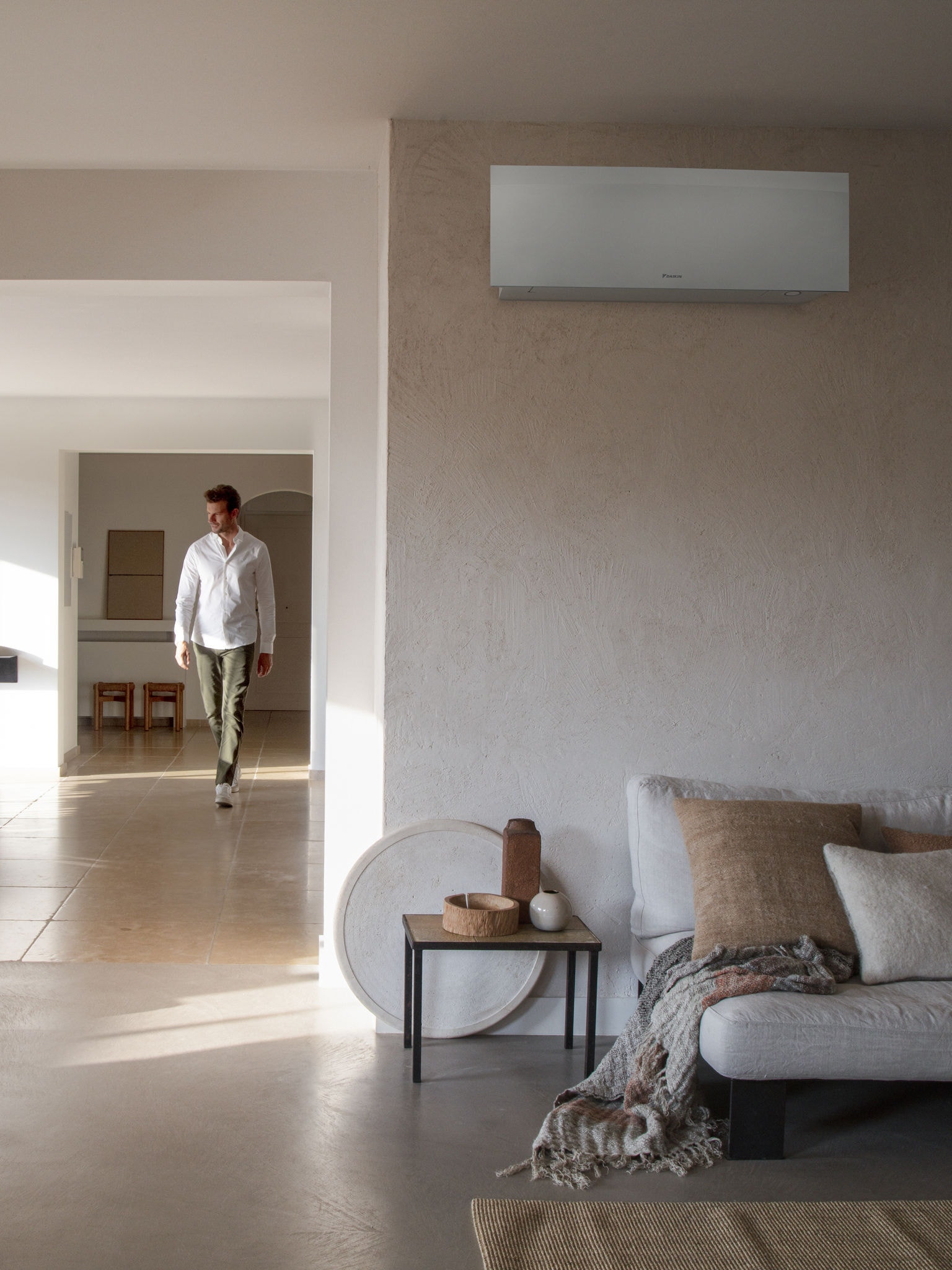
Air Conditioners noise: how quiet are modern systems?
Understand real air conditioners sound levels, what causes noise, and how installation affects acoustic comfort at home

Modern air conditioners are much quieter than many people expect. Most outdoor units operate at 40–60 dBA sound pressure, similar to a normal conversation, while some advanced systems can go as low as 28 dBA. Although heat pump sound can raise concerns for homeowners and neighbours, improved design, smart technology and proper installation significantly reduce noise. In this guide, you’ll learn what sound levels mean, what causes heat pump noise, and how to ensure quiet, comfortable heating and cooling at home.
How air conditioners work and why sound levels matter
Air source heat pumps are an efficient solution for heating and cooling your home while reducing environmental impact. They work by transferring heat between indoor and outdoor environments using a refrigerant.
During colder months, the refrigerant absorbs heat from the outdoor air, even at low temperatures, and transfers it indoors. In summer, the process reverses: the system extracts heat from inside and releases it outdoors to cool the home.
Because this process relies on components such as fans, compressors and refrigerant movement, some operational sound is normal. Understanding what contributes to heat pump sound helps you find the right balance between performance, efficiency and acoustic comfort.
Are air conditioners really that noisy?
Many homeowners worry that heat pumps are loud machines humming constantly outside their homes. In reality, modern units like Daikin's typically operate at 40-60 dBA sound pressure, comparable to normal conversation or a quiet office.
Advances such as inverter compressors, aerodynamic fan design and sound-dampening casings have significantly reduced the acoustic footprint of modern systems, helping to minimise the risk of noise complaints from neighbours when units are correctly installed.
Understanding sound ratings and measurements
Before evaluating whether a heat pump is noisy, it’s essential to understand how sound is measured, and what those numbers actually mean in everyday terms. Sound is measured in decibels (dBA), a logarithmic unit, meaning even a small numerical increase represents a much larger change in perceived loudness.
The industry distinguishes between:
- Sound power: the total acoustic energy emitted by the unit itself, independent of distance or environment
- Sound pressure: what you actually hear at a specific distance, usually measured between 1 and 5 metres from the unit
For this article, all figures refer to sound pressure.
To put this into context, typical household noise levels include:
- A modern refrigerator: 30-50 dBA
- A dishwasher: 45–55 dBA
- A washing machine: 50–60 dBA
In other words, modern heat pumps operating at 40–60 dBA are comparable to everyday appliances most homeowners already live comfortably with.
Perceived noise also depends on the environment. Open spaces disperse sound, while enclosed areas or reflective surfaces can amplify it. Distance matters too—moving just a few metres away can reduce sound to a soft background level.
What noise do air conditioners make and where does it come from?
Heat pump noise consists of normal operational sounds during heating or cooling cycles.
- The compressor produces a steady, low hum
- The outdoor fan creates airflow noise similar to a gentle breeze
- Defrost cycles may cause a brief “whoosh”
- Occasional clicks at start-up or shutdown are normal
The outdoor unit’s fan and compressor are usually the main contributors to heat pump sound. While running, the fan moves large volumes of air and the compressor generates vibration as it pressurises refrigerant.
Only unusual noises—such as rattling, buzzing or metallic scraping—indicate potential issues like loose components or poor installation that require professional attention.
How quiet are modern air conditioners?
Modern heat pumps operate in the 40-60 dBA sound pressure range, with some advanced systems reaching 28-40 dBA sound pressure, comparable to a quiet room or rustling leaves. This quiet operation is achieved through improved compressor insulation, refined vibration-reduction mounts and aerodynamic fan blades.
Daikin’s night quiet mode reduces outdoor noise by around 3 dBA during night-time hours. The mode activates when outdoor temperature drops at least 5°C below the day's peak, making it well suited for residential settings. This comes with a slight reduction in capacity as the compressor operates at lower speeds.
Some models also include night mode or low-noise modes that reduce sound levels by around 1–3 dBA during sensitive hours.
Common air conditioner noise issues and causes
Most noise-related issues arise from installation rather than the technology itself.
Vibration can transfer through walls or decking if the unit is not mounted securely, creating a low-frequency hum. Loose components—such as fan blades, panels or pipework—can also cause rattling or buzzing.
Environmental factors also matter. Heat pumps installed in narrow spaces or close to reflective surfaces, such as walls or corners, may experience sound amplification as sound waves bounce back toward the home.
Correct siting, stable mounting and routine maintenance eliminate nearly all nuisance noise. In most cases, complaints are linked to avoidable installation oversights. Small adjustments in position, supports or airflow clearance can produce noticeable improvements in sound levels.
Is my air conditioner too loud, and what are the signs of a failing system?
If your heat pump seems unusually noisy, start with a simple checklist:
- Is the unit level and securely mounted?
- Are panels and components properly fixed?
- Is airflow clear and unobstructed?
Persistent high-pitched noise, vibration or rattling may require professional inspection.
Regular servicing, including component checks, cleaning, and tightening, helps maintain the acoustic performance and prevent future noise issues.
Most installers are also capable of services air conditioners, so feel free to reach out should you feel that your unit needs to be checked or serviced.
How to reduce air conditioner noise
Practical steps and installation choices can significantly lower heat pump noise and ensure quiet operation at home.
Installation tips to minimise sound
Minimising heat pump noise starts with smart installation choices:
- Choose the right location: Position the outdoor unit away from frequently used indoor spaces and neighbouring properties. Avoid tight corners or enclosed areas that can reflect and amplify sound.
- Ensure stable mounting: Install the unit on a solid foundation, such as a concrete pad or purpose-built wall bracket, to reduce resonance.
- Use anti-vibration measures: Rubber pads or anti-vibration mounts prevent mechanical vibration from transferring into walls or timber structures.
- Select the correct unit size: Proper system sizing avoids excessive cycling, which can increase noise levels.
- Maintain clear airflow: Keep the area around the unit free from obstructions such as dense plants that can create airflow turbulence.
With thoughtful placement and professional installation, modern heat pumps operate quietly enough to go largely unnoticed by both homeowners and neighbours.
How to mitigate existing air conditioner noise
If your current heat pump is too noisy, several practical solutions can help:
- Clean fan blades and remove debris around the unit
- Ensure components are secure and well maintained
- Use eco or reduced-output modes during sensitive hours
- Add acoustic enclosures, barriers or airflow-friendly fencing
- Relocate the unit to a less sensitive area if possible
- Upgrade to a newer, quieter model if needed
Relocating the unit may involve additional installation costs, but it can significantly reduce sound disturbance in some cases.
If your system is outdated, upgrading to a newer model can reduce noise while improving long-term efficiency and running costs. Most noise issues stem from small mechanical or installation factors rather than inherent loudness.
Noise limits and regulations for air conditioners
Planning rules typically require noise levels at neighbouring properties to remain within accepted limits. In some markets, thresholds require sound at the nearest neighbour’s window to remain around 42 dBA sound pressure.
A noise nuisance is generally defined as sound that is persistent, disruptive and affects a neighbour’s ability to enjoy their property.
Heat pumps must also meet relevant product standards. For extra reassurance, heat pumps carry a CE label, which includes declared sound level information.
Most air source heat pumps fall under permitted development rules, meaning they can be installed without planning permission if acoustic and placement criteria are met. Local regulations vary, so installation should always be checked against local requirements.
Do air conditioners get louder in winter?
Cold weather can temporarily increase noise levels as the system works harder to extract heat.
When frost builds on outdoor coils, defrost cycles cause temporary increases in fan and compressor noise. Icing, snow or restricted airflow can force units to run at higher capacity, raising sound output until conditions improve. Daikin's low-noise modes reduce speed during quieter periods, ensuring noise remains manageable even in colder weather.


How air conditioners are designed for quiet operation
Modern air conditioners are engineered for low-noise performance through advanced components and intelligent system design.
Daikin technology: how silence is engineered
Modern air conditioners achieve quiet operation through advanced engineering:
- Inverter compressors reduce start-stop noise by adjusting output to match demand
- Aerodynamic fans minimise airflow turbulence
- Sound-dampening casings and insulation absorb vibration and help contain internal sound
- Smart speed control optimises fan and compressor performance continuously
These innovations allow Daikin heat pumps to operate quietly without compromising efficiency.
Air conditioners and acoustic design
The main factor affecting sound is the heat pump system’s capacity, which determines compressor size. Larger compressors naturally generate more sound, but design improvements help mitigate this.
Daikin combines insulated casings, large fan designs, careful siting, orientation and anti-vibration footings to keep air source heat pump systems unobtrusive, even in sensitive residential environments.
Energy efficiency and sound working together
Quieter air conditioners are often the most energy-efficient because efficient systems operate at steady, low compressor speeds rather than switching rapidly. Lower energy consumption reduces stress on components, decreasing vibration and sound output. Modern engineering allows high-efficiency units to maintain comfortable temperatures whilst running slowly and quietly.
Air conditioners in urban environments
In urban homes with limited space, careful placement is key. Positioning the unit away from shared walls, ensuring clear airflow and using vibration-reducing mounts helps maintain compliance with noise regulations.
Modern systems, including those with low sound modes, are well suited to semi-detached and terraced homes.
The cost of quiet: is it worth it?
Ultra-quiet models may come at a premium due to advanced components and engineering. However, many homeowners find the investment worthwhile for long-term comfort and reduced risk of disturbance. Quiet systems can also contribute to higher property value, as low-impact, energy-efficient heating is increasingly sought after.
Over time, quieter systems often cost less to run, thanks to efficient operation, reduced wear and lower maintenance needs. Balancing upfront cost with ongoing comfort and acoustic performance makes quieter models an appealing choice for many households.
Air conditioners noise: frequently asked questions
Can air conditioners be heard indoors?
In most cases, indoor noise is negligible because the loudest components operate outdoors. Indoor units are typically very quiet and rarely noticeable during normal operation.
Will a air conditioners cause neighbour complaints?
Evidence shows neighbour disputes are rare when installers follow correct placement guidance and comply with established noise limits.
Are air conditioners louder in winter?
Any rise in sound levels is usually linked to temporary defrost cycles, after which normal operation resumes.
Are larger air conditioners louder?
Not necessarily — correct sizing and system modulation have a far greater influence on sound levels than unit size alone.
What if a heat pump sounds unusually loud?
Professional diagnostics can quickly identify issues such as debris, vibration, or loose fittings, helping restore quiet, efficient operation.
Conclusion: Quiet heating is the new normal
Modern heat pumps are engineered for quiet, stable operation, making concerns rooted in older technology increasingly outdated. While heat pumps do produce sound, modern design, correct installation, smart controls and regular maintenance ensure noise levels remain low and comfortable for residential environments.
By selecting the right system, installing it correctly and maintaining it properly, homeowners can enjoy quiet, energy-efficient heating and cooling without disturbing their surroundings.
Key takeaways
- Modern air conditioners are much quieter than expected, typically 40–60 dBA
- Noise issues are usually installation-related, not technology-driven
- Placement and environment strongly affect perceived sound
- Cold weather may temporarily increase noise, but this is normal
- Daikin systems combine low-noise design with high efficiency
Ready to enjoy efficient comfort without unwanted noise?