Air conditioning types explained: find the best AC system for your home
Explore the key air conditioning types, their benefits, and practical tips to choose the perfect system for your home’s comfort and efficiency
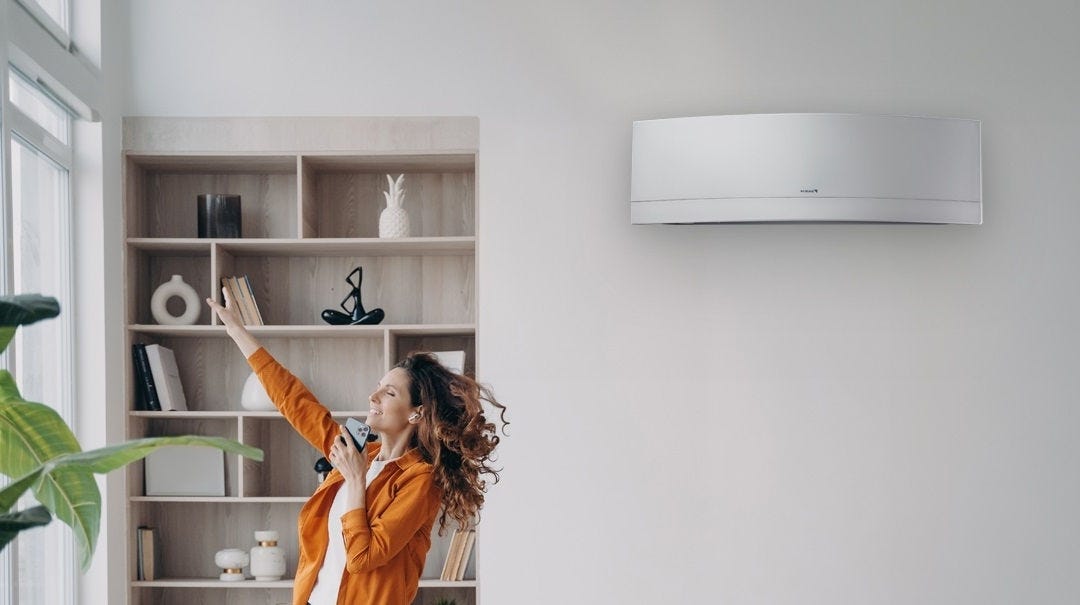
Choosing the right air conditioning system depends on your home type, budget and comfort needs. Wall-mounted systems suit most apartments and smaller homes, while ducted or multi-split setups work best for larger houses or new builds. Key factors include room size, layout, climate and energy efficiency goals. In this guide, you'll explore the main system types and help you choose the right fit.
Introduction to air conditioning types
There's nothing quite like stepping into a perfectly climate-controlled home on a sweltering summer day or during a bitterly cold winter evening. But with so many different types of air conditioning systems available today, choosing the right one can feel overwhelming. Are you renovating an old cottage? Moving into a brand-new apartment? Or perhaps you're looking for something that is going to save your electricity bill from going into the thousands of Rands.
We've been in the comfort business for nearly a century, and we've learned a thing or two about what works where. Every home tells a different story, and every family has different needs. Daikin's air conditioners, also known as air conditioners, have been developed to perfectly control your indoor climate, from discreet wall-mounted units that practically disappear into your décor, to concealed units that vanish into your ceiling.
The truth is, there's no one-size-fits-all solution when it comes to air-to-air heat pumps. What works perfectly for your neighbour's semi-detached might be completely wrong for your period terrace. Understanding the options available helps you make an informed decision that you'll be happy with for years to come. As a leader in HVAC innovation, we are happy to guide you through the most important factors to take into account when choosing an air-to-air heat pump.
Which air conditioning system is right for your home?
Before diving deep into technical details, let's help you identify which type of system makes sense for your specific situation. Understanding these real-world scenarios can help you narrow down your options quickly.
Family homes vs apartments
Large family homes often benefit from ducted or central systems that provide consistent comfort throughout multiple rooms. Apartments and smaller homes typically find split or multi-split systems more practical and cost-effective. For most residential applications, wall-mounted systems remain our most popular choice because they offer excellent performance without major installation complications.
New construction vs renovations
New builds offer the opportunity to integrate ducted systems seamlessly, while renovation projects often favour split systems that can be added without major structural modifications. If you're renovating and want the cleanest aesthetic possible, our concealed ceiling systems can create an incredibly sophisticated residential environment.
Energy efficiency vs budget focus
You can meet both your eco-conscious and budget goals through the same system. In a large family home, a multi-split system can heat or cool multiple rooms using just one outdoor unit. If you have a smaller home and budget constraints, a pair back-to-back system can be a practical solution. If you prefer to spread the investment, starting with a high-capacity multi outdoor unit allows you to add indoor units later.
Comparisons at a glance
Now that you've identified your general situation, this quick comparison table will help you weigh the practical considerations for each system type. We've distilled years of installation experience and customer feedback into these key factors that actually matter in day-to-day living. Use this as your shortlist tool. You can always dive deeper into the systems that catch your attention.
| Type | Ideal application | Installation level | Efficiency | Maintenance |
|---|---|---|---|---|
| Split system | Apartments, small homes | Moderate | High | Moderate |
| Multi-split system | Multi-room homes | Moderate | High | Moderate |
| Ducted AC | New builds, large homes | Extensive | High | Moderate to high |
| Portable AC | Temporary cooling | None | Low | Low |
| Window units | Older buildings | Low | Moderate | Low to moderate |
Don't forget, our Virtual Experience Centre is a selection tool for end-users to help you find the best fit solution for yourself!
Key factors that should influence your AC choice
Before we dive into the different system types, let's talk about what actually influences your decision. Getting these basics right will save you headaches later and potentially thousands of Rands down the line.
Your space tells the story
A studio apartment in the city has completely different needs than a four-bedroom house in the suburbs. It's not just about square meters either. High ceilings mean you'll need more power to circulate air effectively. We're talking about needing roughly 25% more capacity for every extra foot of ceiling height above the standard 2.4 meters.
Open-plan layouts let air flow naturally between spaces, which can be brilliant for efficiency but tricky for zoning. If your kitchen opens directly onto your living room, cooking heat affects the whole area. Houses with lots of separate rooms benefit from zoned systems where you can control each area independently.
Think about how you actually use your space too. Do you spend most evenings in one room? Are there bedrooms that only get used when guests visit? These patterns matter more than you might think when sizing and positioning systems.
In South Africa, north-facing rooms receive direct sunlight for most of the day, making them warmer and often in need of extra cooling. By contrast, south-facing spaces tend to stay cooler and more shaded. Rooms with large windows require greater cooling capacity, especially if those windows face west, where the late-afternoon sun can be particularly intense.
Climate isn't just about temperature
If you live somewhere with dramatic seasonal swings, you'll want a system that handles both heating and cooling efficiently. Coastal areas can be tricky with all that salt air. You'll need equipment built to handle corrosive conditions. Places that get dusty need better filtration, while high humidity areas require dehumidification as well as temperature control.
Wind patterns matter too. Exposed locations can affect outdoor unit performance, while sheltered spots might not get enough airflow. Even local microclimates within your garden can influence where outdoor units should go.
The real cost conversation
Yes, upfront price matters, but it's only part of the story. There are other costs to consider. Installation complexity varies hugely between system types. A simple wall-mounted pair system might take half a day to install, while a full ducted system could require several days and structural modifications. Don't forget about running costs beyond just electricity. Some systems need regular filter replacements, others might need annual maintenance contracts.
Plus, efficient systems often add value to your property, which is nice if you ever decide to move. Estate agents tell us that homes with modern, efficient climate control sell faster and for better prices.
Making it look good
Some people prefer sleek wall units that make a design statement. Modern units can look quite sophisticated. Others want everything hidden away completely, which is where ducted systems shine. Think about your décor style and how visible equipment will affect your living space.
What if you're renting?
While our solutions are not ideal for renters in general, long-term renters can still consider installing a pair system in written agreement with their landlord. It's in their interests anyway, since the installation adds long-term value to the property. In short, renters can explore this option, but it involves coordination and commitment.
Why are wall-mounted systems the most popular choice and which alternatives exist?
Walk through any modern neighbourhood, and you'll spot split systems all over the place. There's a simple reason for this popularity: they work brilliantly for most situations without requiring major renovations.
Perfect for real-world situations
Wall-mounted systems shine when you need air conditioning but don't want to tear apart your home installing ductwork. The indoor unit mounts on your wall, the outdoor unit sits outside, and a couple of small holes through the wall connect them. That's it. No major construction, no months of disruption.
This makes them ideal for heritage buildings where you can't make major modifications, especially to heritage sites. They're also perfect for people who want to add cooling to specific rooms without affecting the whole house. Maybe you work from home and your office gets unbearably hot in summer, or perhaps your master bedroom faces north and becomes an oven every afternoon.
Many families start with one system in their main living area and add more to bedrooms or other spaces as budgets allow. It's a sensible approach. You get immediate relief where you need it most, then expand gradually. Each system operates independently, so if one develops a problem, the others keep working.
Installation and efficiency
- The outdoor unit needs proper clearance for air flow, usually at least half a metre on the sides where air enters and exits. It also needs to be accessible for maintenance and not positioned where it'll annoy neighbours with noise.
- The indoor unit needs to be positioned where it can distribute air effectively throughout the room without blowing directly on where people typically sit.
Modern wall-mounted systems with inverter technology are impressively efficient. Many of our models hit SEER ratings above 7.5, making them more efficient than older conventional systems. That efficiency translates directly into lower electricity bills and less environmental impact.
Quiet and clean operation
Today's split systems operate whisper-quiet. You'll barely notice they're running. We're talking about sound pressure levels as low as 19 dB(A) for the indoor unit, which is quieter than a whisper. Built-in filtration removes dust, allergens, and odours, actually improving your indoor air quality while keeping you comfortable.
Some of our systems, like the Emura and Perfera air conditioners include Flash Streamer technology, which actively breaks down pollutants, allergens, and odours at the molecular level. It's particularly effective against things like cooking smells, pet odours, and airborne allergens or bacteria.
Ceiling concealed systems: the premium hidden option
Where aesthetics are a top priority, ceiling concealed systems represent the ultimate in discrete climate control. While these systems have traditionally been more popular in commercial applications, they're increasingly chosen for residential projects where maintaining design integrity is paramount.
Maintaining design integrity
Ceiling concealed systems are ideal for design-led environments where maintaining clean, uncluttered spaces is essential. The system operates invisibly, preserving the aesthetic integrity of sophisticated interiors while delivering exceptional comfort.
Just like wall-mounted systems, they operate quietly, with many ceiling concealed models producing low sound pressure, effectively eliminating noise distractions. Despite being hidden, these systems deliver powerful, even airflow throughout the space.
These systems are best suited for new builds or major renovations where installation can be planned during construction. While installation costs are generally higher than those for wall-mounted systems, the premium aesthetic result often justifies the investment for discerning homeowners.
How can air conditioners provide efficient cooling and heating all year round?
Heat pumps represent one of the most versatile and efficient climate control technologies available, providing both cooling in summer and heating in winter by transferring heat between indoor and outdoor environments.
The reversible advantage
Heat pumps extract heat from inside during summer for cooling, then reverse the process in winter to draw heat from outside air, even in temperatures as low as -20°C, to warm your interior. The same equipment handles both seasons efficiently, which means you're not buying and maintaining separate heating and cooling systems.
This might sound like magic if you're not familiar with the technology. The trick is in the refrigerant, which can absorb heat energy even from very cold air and then concentrate it to useful temperatures indoors. Modern heat pumps have overcome the limitations of earlier generations and work effectively well below freezing.
Remarkable efficiency
Our air-to-air heat pumps, such as those in the Perfera or Daikin Emura ranges, use advanced inverter compressors that continuously adjust their speed based on real-time temperature demand. Many models achieve Seasonal Coefficients of Performance (SCOP) above 4.5, delivering over 4.5 kWh of heat for every one kWh of electricity consumed.
Smart control integration
Combined with smart control systems like our Onecta app, you can remotely manage temperature, scheduling, and energy use from your smartphone. The result: up to 30-40% savings on energy bills compared to traditional heating systems while significantly reducing your carbon footprint.

Multi-split air conditioning for multiple rooms
Making sense for larger homes
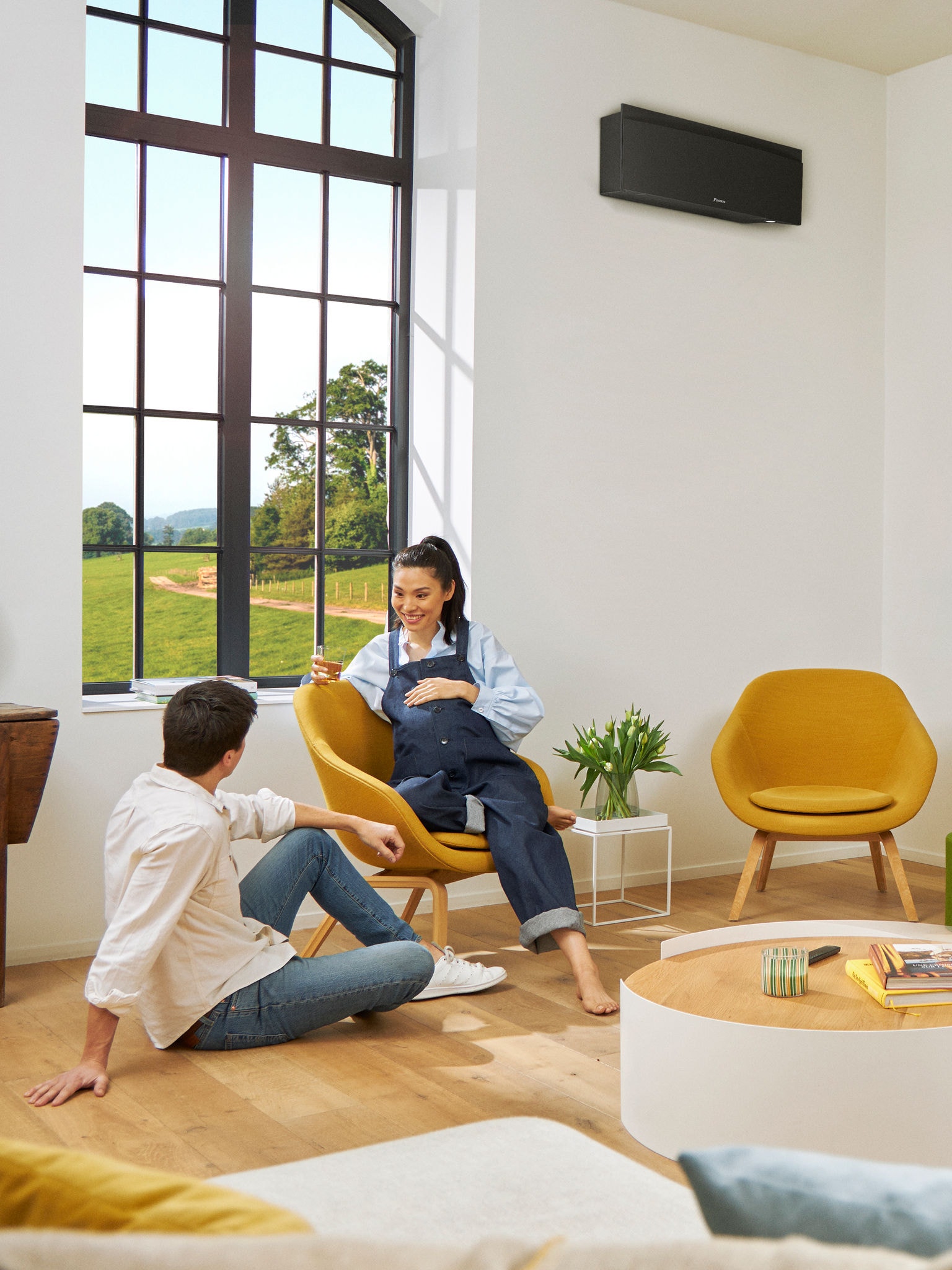
If you need to cool or heat several rooms but don't want outdoor units cluttering up your garden or balcony, multi-split systems offer an elegant solution. Multi-split systems connect several indoor units to one outdoor unit. Each room gets its own controls, so different family members can set their preferred temperatures.
The beauty of this setup becomes obvious when you consider family dynamics. Teenagers who seem to generate heat just by existing can keep their rooms arctic, while grandparents can maintain more comfortable temperatures in their spaces. The system intelligently distributes cooling and heating capacity where it's needed most at any given time.
Instead of multiple outdoor units taking up space and creating noise, you have just one. This simplifies maintenance too. One unit to service instead of several. The outdoor unit for a multi-split system is larger than a single unit, but it's still smaller than having three or four individual outdoor units.
Ducted air conditioning systems
Ducted air-to-air heat pump systems distribute cooled or heated air through concealed ducts within ceilings or walls, offering a clean and seamless indoor environment without visible units. This approach delivers conditioned air through discrete vents while keeping all equipment hidden from view.
The ultimate in aesthetic integration
Ducted systems provide the cleanest possible aesthetic, with only small grilles visible in ceilings or walls. This makes them ideal for luxury homes, contemporary designs, or any space where maintaining clean lines and uncluttered surfaces is important.
Interior designers particularly appreciate ducted systems because they don't have to work around visible indoor units when planning room layouts. The grilles can be painted to match ceiling colours or chosen in finishes that complement the interior design.
Even temperature distribution
By distributing air through multiple outlets, ducted systems eliminate hotspots and drafts that can occur with other system types. The result is remarkably consistent comfort throughout your home, with temperature variations minimised between rooms.
Installation investment
Ducted systems are best suited for new builds or major renovations where installation can be planned during construction. While installation costs are generally higher than those for split or multi-split systems, this premium depends on the complexity of the ductwork and the size of the property.
Our ceiling concealed ducted models are designed to blend into the architecture, offering quiet operation and smart control options to maximise comfort discreetly.
Portable air conditioners: benefits and limitations
Portable air conditioners offer immediate cooling solutions without permanent installation, making them attractive for specific situations despite some inherent limitations.
Mobility and convenience
The primary advantage of portable units is their flexibility. They can be moved from room to room as needed and require only a standard electrical outlet and window access for venting. This makes them ideal for renters or temporary situations where permanent installation isn't feasible.
Performance considerations
However, portable units typically operate at higher noise levels—usually between 50-60 dB(A)—compared to fixed systems that can operate as quietly as 19 dB(A). They also generally achieve lower energy efficiency ratings, with SEER values around six compared to split systems that can reach eight or higher.
They can also take up floor space and require venting through a window or wall opening. Despite these drawbacks, their convenience makes them popular for short-term use.
Window air conditioners: are they practical?
Window air conditioners are compact, self-contained units designed to fit into a window opening, providing an affordable and space-saving cooling solution primarily for single rooms.
Low-cost, space-saving solution
Window units provide the most budget-friendly entry point for air-to-air heat pumps, making them attractive for cost-conscious consumers or temporary cooling needs. They're especially suited for older buildings or situations where installing split systems isn't practical.
Performance limitations
Window units tend to be noisier, typically producing sound pressure between 50 and 60 dB(A), compared to modern split systems that can operate as quietly as 19 to 30 dB(A). They are also generally less energy efficient, with SEER ratings often around six to seven, whereas air-to-air heat pump systems commonly achieve eight or above.
Despite their affordability, window units come with installation challenges such as fitting them securely in window frames and ensuring proper insulation.
Evaporative air coolers and climate sustainability
Evaporative air coolers use the natural process of water evaporation to cool the air, making them an energy-efficient and environmentally conscious option for specific climates.
How they work
These systems work best in dry, hot climates where the air humidity is low, as they add moisture to the environment while cooling. However, in humid climates, evaporative coolers are less effective and can even increase discomfort by raising humidity levels.
While they consume far less electricity—typically 50 to 100 watts per hour compared to 500 to 1,500 watts for a split AC unit—their cooling capacity is limited. Most evaporative coolers deliver around one to 2.5 kW of cooling power, making them best suited for small rooms or semi-outdoor spaces.
Essential features in modern air conditioners
Today's air conditioners incorporate numerous advanced features. Look for these must-have features when buying a modern system:
- Inverter technology: Inverter technology allows compressors to adjust their speed dynamically based on demand, reducing energy consumption and maintaining more consistent temperatures. This results in quieter operation and significant energy savings compared to traditional fixed-speed systems.
- Smart controls and connectivity: Wi-Fi connectivity and smartphone apps enable remote operation, scheduling, and monitoring. These features allow you to optimise energy use, ensure your home is comfortable when you arrive, and monitor system performance remotely.
- Air purification systems: Advanced filtration technologies remove allergens, pollutants, and odours from your indoor air. Our patented flash streamer technology helps remove allergens, pollutants, and odours, ensuring healthier indoor air.
Complementary solutions to enhance air circulation
While not air-to-air heat pump systems themselves, certain devices can significantly enhance the performance and comfort provided by your primary climate control system.
- Duct fans help optimise airflow within ducted systems, ensuring even distribution and reducing the workload on main units. This can improve overall system efficiency and comfort consistency throughout your home.
- Ceiling fans provide cost-effective air movement that helps occupants feel cooler without lowering actual temperatures. When used alongside air conditioning systems, they can reduce energy consumption while maintaining comfort levels.
Environmentally conscious alternatives
As environmental awareness grows, many homeowners are seeking air conditioning solutions that minimise their ecological impact while maintaining excellent performance.
- Modern systems increasingly use refrigerants with lower Global Warming Potential (GWP), reducing their environmental impact if released into the atmosphere. This represents a significant improvement over older refrigerant technologies.
- High-efficiency systems reduce electricity consumption, lowering both operating costs and environmental impact. When powered by renewable energy sources, efficient air-to-air heat pump systems can provide excellent comfort with minimal carbon footprint. We are at the forefront of developing such technologies with low environmental impact, enabling consumers to reduce their carbon footprint while enjoying efficient cooling.
Air conditioning installation: getting it right
Proper installation is crucial for achieving optimal performance, efficiency, and longevity from your air conditioner. The quality of installation can significantly impact everything from energy consumption and comfort levels to system lifespan and warranty coverage.
Professional assessment
Installation begins with a thorough assessment of your property, including room sizes, insulation levels, sun exposure, and existing electrical systems. This evaluation ensures the chosen system is properly sized and configured for your specific needs.
Professional installers use sophisticated calculation methods to determine exact capacity requirements for each space, considering factors like window sizes and orientations, ceiling heights, and occupancy patterns. They also evaluate your home's electrical system to ensure it can safely support the new equipment.
System commissioning
After installation, systems must be properly commissioned to ensure correct operation. This includes testing all functions, verifying refrigerant levels, and confirming that controls operate as intended.
Choosing qualified installers
Using qualified installers ensures proper installation and maintains warranty coverage. Professional installation provides peace of mind and optimal system performance.
How regular maintenance protects your air conditioner investment
Regular maintenance is essential for keeping your air-to-air heat pump system operating efficiently and extending its lifespan, protecting your investment while ensuring consistent comfort.
Routine care tasks
Simple maintenance tasks include regularly cleaning or replacing filters, keeping outdoor units clear of debris, and ensuring adequate airflow around all units. These basic steps help maintain efficiency and prevent common problems that can lead to expensive repairs.
Filter maintenance is particularly important because dirty filters restrict airflow, forcing the system to work harder and consume more energy. Most filters should be cleaned or replaced monthly during heavy-use periods.
Professional servicing
Annual or bi-annual professional servicing includes refrigerant checks, electrical connection inspection, and comprehensive system performance evaluation. This professional attention helps identify potential issues before they become expensive problems, often preventing breakdowns during peak usage periods.
Expected lifespans
Typical lifespans vary by system: split and multi-split units last around 10-15 years, while ducted and central systems can last 15-20 years with proper care. Our units are known for their reliability and often come with extended warranties, offering peace of mind compared to generic brands.
Why homeowners trust us
With nearly a century of experience in climate control, we've established ourselves as a global leader through relentless innovation and unwavering commitment to quality.
- Proven innovation leadership: We pioneered many of the technologies that define modern air conditioning, including inverter systems and advanced heat pump technologies. Our research and development efforts continue to push the boundaries of what's possible in climate control.
- For residential applications, we offer standout solutions that cover virtually every need:
- Wall-mounted excellence: Our most popular residential choice, these units combine exceptional efficiency with simple installation and elegant design. Perfect for apartments, single rooms, and retrofit applications where you want immediate comfort without major renovations.
- Concealed ceiling sophistication: Originally developed for commercial applications, these systems bring premium, invisible climate control to discerning residential customers who demand the cleanest possible aesthetic.
Comprehensive product range
From compact wall-mounted units to sophisticated systems, we offer solutions for every application. Our product range ensures you can find the perfect system regardless of your specific requirements or constraints.
Energy efficiency excellence
Our systems consistently achieve industry-leading efficiency ratings, helping reduce both operating costs and environmental impact. This commitment to efficiency extends throughout our entire product range.
Whisper-quiet operation and elegant design
Understanding that air conditioning should enhance your living environment rather than detract from it, our systems are engineered for whisper-quiet operation and elegant aesthetics that complement any interior design.
Professional support network
Our extensive network of certified installers and service technicians ensures professional support from initial consultation through ongoing maintenance. This network provides local expertise backed by global experience and standards.
Daikin is a global leader in HVAC innovation, known for pioneering inverter technology and high-efficiency heat pump systems. Its units are designed for quiet operation, energy savings, and modern aesthetics that suit any home or office.
The Daikin Cloud Service enables remote monitoring, control, and diagnostics, helping optimise energy use and reduce on-site maintenance. For residential systems, the platform allows HVAC professionals to manage performance throughout the system’s life cycle.
Backed by a certified installer network and comprehensive support, Daikin delivers reliable, efficient climate control with a strong focus on service and long-term value.
Final thoughts & key takeaways: choosing the right AC system
In summary, choosing the right air conditioning system ensures comfort, efficiency and long-term value. Proper installation and maintenance are crucial for energy savings and system longevity. With professional support and smart technology, you can enjoy reliable, quiet and efficient climate control year-round.
Key takeaways
- Wall-mounted systems are versatile, easy to install, and ideal for most homes.
- Multi-split and ducted systems offer comfort for larger or new-build homes.
- Heat pumps provide both heating and cooling efficiently throughout the year.
- Smart controls and inverter technology reduce energy use and enhance comfort.
- Professional installation and regular maintenance maximize system performance and lifespan.