How does the installation of an air conditioner work?
Thinking about having an air conditioner? Here’s what you need to know.

Installing an air conditioner is a specialist process. It should be carried out by a professional who can advise you on suitability and specification and install quality units with the minimum of disruption for maximum effectiveness.
How does the installation of an air conditioner work?
There are six main steps to air conditioner installation:
- Step 1: Installation of the air conditioner indoor unit(s). First, your contractor will install the wall-mounted, floor-standing or ceiling-concealed heat pump indoor units, which are designed to emit warm or cold air into your rooms.
- Step 2: Setting up access points inside your home. Next, they will create an access point(s) to connect the indoor unit(s) to the outdoor unit by drilling a hole in the wall for the electrical wiring and drain piping.
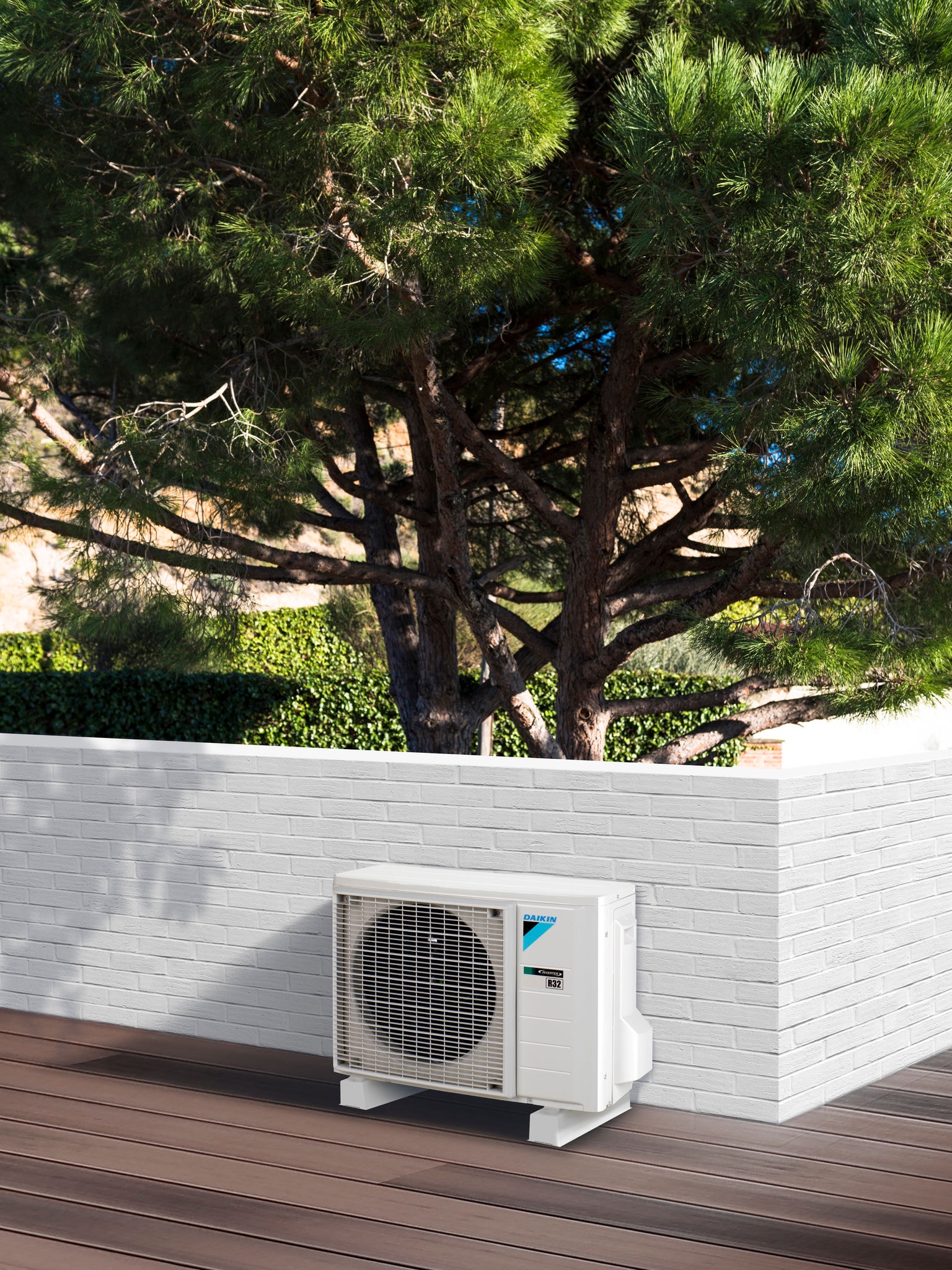
- Step 3: Installation of the air conditioner outdoor unit. Then they will install the heat pump outdoor unit, usually mounting it on the side of your home. In colder places, the unit must be off the ground, above where snow could settle.
- Step 4: Connection of electrical wiring. Afterwards, they will connect up the electrical wiring. Wires should be insulated as necessary.
- Step 5: Connecting the piping. They will link up the refrigerant pipes that transport hot gas or cold liquid to the indoor units and the drain pipes that remove condensation. These should also be insulated as required.
- Step 6: Quality testing phase. Finally, they will carry out thorough testing of the entire system to ensure it is working optimally before use.

What do you need to know before getting your air conditioner installed?
Choose a high-quality heat pump system that will be reliable and long-lasting, with a high energy efficiency rating.
Make sure your home is well-insulated and the area around the indoor and outdoor units is clear. They need sufficient airflow to ensure the system works as efficiently as possible.
Air-to-air heat pumps get 80% of the energy they need to work from the outside air. Just 20% comes from electricity. Even so, you will need a consistent electricity supply to run the system.
Have your air conditioner installed professionally
Use a professional contractor to install your air conditioner.
Before starting, your heat pump installer will inspect your home to check what solution is best for your home.