Save money on your energy bill: actionable ways to cut costs
Practical ways to reduce energy costs across heating, appliances and daily habits

Rising energy bills have made saving energy at home essential rather than optional. The good news is that small changes across heating, appliances and everyday habits can significantly reduce costs. This guide presents practical, proven strategies to help you take control of your household energy consumption — while maintaining comfort and avoiding unnecessary compromises.
With the cost of energy at record levels, we’re all wondering how to reduce energy consumption and how to save money on energy bills. Read on to discover our top energy-saving tips and the simple steps you can take in your home to make saving energy easy.
How to save money on heating
Energy bills are at an all-time high and over 90% of the energy we use at home is used for our indoor heating. So by making your heating system and your home as energy efficient as possible, you could save yourself a lot of money. Here are some ideas of where to start:
- Insulate your home
Check if you need loft or cavity wall insulation and consider installing double glazing if you don’t already have it. Insulation keeps the heat in during winter and keeps your house nice and cool during the hot summer months. So you need to heat and cool your home much less, thus reducing your energy bills considerably.
- Draughtproof your rooms
Heat escapes through the gaps and cracks in your home, so do a thorough check of each room and seal up any that you find. Check door and window frames, electrical outlets, fireplaces, vents and fans, attic hatches, letter boxes and the entrance points for electricity and gas supplies.
- Install an air conditioner
With good insulation and draft-proofing, you need to heat your rooms much less but what if your old heating system still consumes a lot of energy? The smartest move is to install an air conditioner.
Air conditioners are an unrivalled energy-efficient and sustainable way of providing heating and cooling. They’re powered by electricity so you can save significant amounts of money on your utility bills. While you will use more electricity, this extra cost will be outweighed by the savings you will make on electricity. That’s because heat pumps (AKA air conditioners) extract free renewable energy from the air and use much less energy to run.
Air conditioners are also very low-maintenance, so you won’t need to worry about regular servicing or repairs. Their running costs are low and a well-maintained heat pump can last for 10-15 years. So they’re a smart investment in the long run.
- Get smart with your heating thermostat
One of the easiest ways to save money on your heating bill is by lowering your thermostat. You’ll quickly get used to a slightly lower temperature and dropping it by just one degree Celsius could result in energy savings of seven per cent per year.
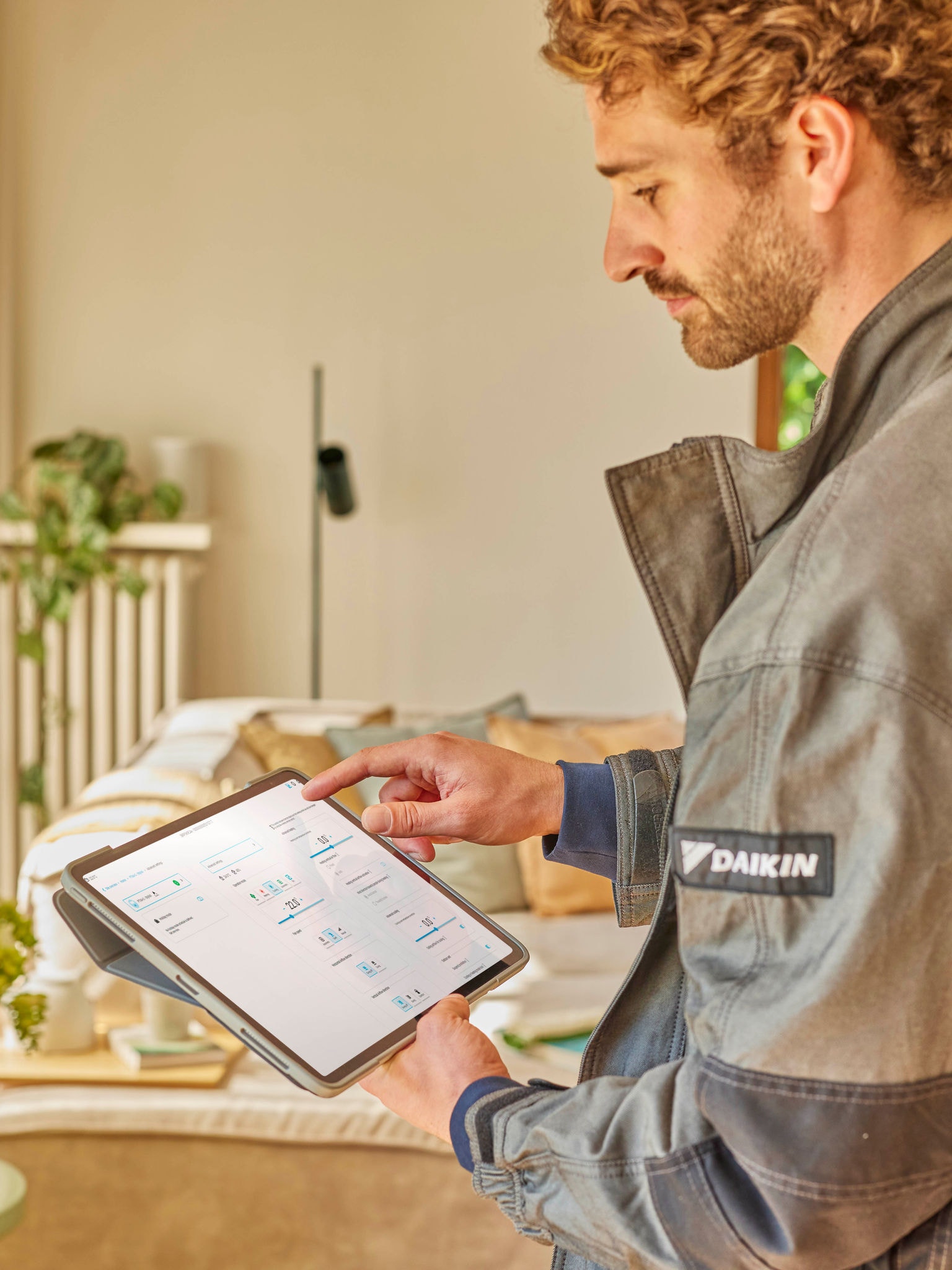
A smart heating thermostat is a great way to stay in control of your room's temperature, so you’re not heating rooms unnecessarily. All Daikin home air conditioners and heating systems are controlled from your phone or tablet with the easy-to-use Onecta app.
You can change the temperature on your thermostat, review your energy consumption and set temperature schedules via the app. So if you know you're going to be out all day, you can easily turn down the heat and reduce your energy usage.
How does a smart meter save you money?
An energy saving meter, or ‘smart meter’, shows you how much electricity you are using at any time. So you can learn more about your energy usage and easily see how changing your habits can help lower the amount you use. Learning how small changes can help reduce your energy consumption is a great way to save money.
What impact does renewable energy have?
Governments worldwide are committing to cutting their greenhouse gas emissions, making renewable energy sources ever more popular. Technologies that harness solar renewable energy and wind renewable energy are on the rise, helping to reduce our impact on the planet.
One of the benefits for households is the money saved from installing renewable energy technologies like solar panels and air conditioners in the home. As they draw free energy from the environment, you can cut your energy bills while making a positive change for the future.


Save electricity in the kitchen
Improving kitchen efficiency is an easy way to reduce daily energy consumption.
- Keep fridge and freezer doors closed as much as possible and defrost regularly to maintain efficiency
- Use lids on pans to reduce cooking time and energy usage
- Turn off extractor fans when not needed to avoid unnecessary electricity use
- Consolidate appliance use to avoid running multiple high-energy devices at the same time
Properly maintaining kitchen equipment, including ovens and kettles, helps extend appliance lifespan while reducing overall energy consumption.
Small, consistent adjustments in daily kitchen routines can lead to notable long-term savings, while greater awareness of energy-intensive tasks supports more sustainable habits.
Keeping your fridge well-stocked (but not overfilled) also helps maintain temperature stability, reducing the energy required to keep food fresh.
Cut phantom power
Does turning the kettle off at the wall save electricity? Yes — unplugging devices prevents unnecessary standby power draw. Many electronic devices continue to consume electricity even when not in active use. This is known as phantom power (or standby energy consumption) and can quietly increase your energy bills over time.
Devices such as TVs, gaming consoles, Wi-Fi routers and phone chargers draw power even when idle. Using smart power strips or unplugging devices completely prevents this phantom consumption. Small reductions across multiple devices accumulate to significant annual savings.
Scheduling appliance use and turning off unused electronics improves efficiency, while raising awareness of phantom energy helps uncover hidden waste. Educating all household members ensures these savings are maintained consistently.
Switch to LED lighting
LED bulbs use significantly less energy than incandescent or halogen bulbs and last much longer. While upfront costs are higher, savings accrue over time through lower electricity consumption. Installing LEDs in high-traffic areas maximises efficiency. Switching gradually throughout the home ensures cost-effective replacement.
Properly choosing bulb brightness and placement maintains comfort whilst saving energy. LEDs provide both financial and environmental benefits over their lifespan.
Consider renewable heating solutions
Renewable energy solutions such as solar panels and heat pumps can significantly reduce reliance on conventional energy sources. Solar panels convert sunlight into electricity, lowering grid consumption. Heat pumps transfer ambient heat for efficient home heating, using electricity to extract renewable thermal energy from outdoor air.
The Daikin Altherma air-to-water heat pump range provides efficient heating and hot water by transferring thermal energy from outdoor air into your home.
Air-to-air heat pumps, like a Daikin Emura, provide both heating and cooling whilst consuming less electricity than traditional boilers.
Initial installation may involve significant costs, but long-term savings can offset this investment. Grants or incentives may be available to reduce upfront expenses.
Prepayment meters
Prepayment meters allow households to manage energy use by paying upfront, which can help with budgeting and avoiding unexpected bills. However, they may limit access to cheaper tariffs or offer less flexibility compared to direct debit plans.
In some cases, switching to direct debit billing can provide lower overall costs. Households using prepayment meters should regularly compare options to ensure they are getting the best value.
While prepayment can prevent bill shocks, it is not always the most cost-efficient option. Monitoring consumption remains essential regardless of payment method.
Get an energy audit
A professional energy audit provides a detailed assessment of your home’s energy performance. It helps identify:
- Heat loss areas
- Inefficient appliances
- High-consumption zones
Audits deliver tailored recommendations for improving efficiency and reducing costs. DIY tools, such as thermal imaging or smart meters, can also provide useful insights.
Regular assessments allow households to track progress and implement targeted improvements. By highlighting issues that may not be immediately visible, energy audits help maximise long-term savings.
Get the family involved
Energy saving is most effective when it becomes a shared responsibility.
- Create household energy-saving challenges
- Assign responsibility for lights, heating or appliances
- Educate children about energy use
Family involvement reinforces behavioural changes and increases accountability. Simple incentives or recognition can help maintain motivation over time.
By working together, households can build lasting habits that reduce energy waste and deliver measurable savings.
Upgrade with government grants
Energy efficient improvements, including boiler replacement, insulation and heat pump installation, may qualify for government grants or rebates. Funding reduces upfront costs and encourages households to adopt efficient technology. Evaluating available schemes ensures maximum benefit from financial support.
Coordinating grants with energy audits identifies priority improvements. Subsidised installations accelerate savings and improve comfort. Understanding eligibility criteria ensures households take full advantage of available support.
Use apps to monitor usage
Energy monitoring apps allow households to track electricity, gas and appliance usage in real time. Modern apps offer AI-based predictions of high-consumption periods, and send alerts for unusual or inefficient usage. Automation features enable cut-offs during peak hours or whilst away.
Tracking trends over time helps optimise schedules for heating and appliance operation.
App-based insights complement smart meters and dashboards, providing actionable recommendations for ongoing improvement. Integrating these tools into daily routines supports proactive energy management.
Popular apps include Smappee, Energy Cost Calculator, Joulebug and Mi Home.
Key takeaways
Every small change contributes to reducing household energy consumption and lowering bills. From adjusting thermostats and improving appliance use to upgrading insulation and adopting smarter habits, each action has a measurable impact. Regular monitoring, energy audits and household engagement ensure progress continues over time. Combining smart tools, apps and highly efficient technologies like heat pumps helps maximise savings while maintaining comfort.
- Lower your thermostat by 1°C to reduce heating costs by up to 10%, and consider modern heat pump systems that operate efficiently at lower temperatures
- Replace inefficient appliances with energy efficient models and use them strategically with full loads at lower temperatures
- Insulate your home, draught-proof windows and doors, and bleed radiators regularly to prevent heat loss and wasted energy
- Switch off standby devices, use LED lighting and adopt small daily habits like shorter showers to accumulate significant annual savings
- Use smart meters, monitoring apps and comparison tools to track consumption, identify inefficiencies and find better energy suppliers
- Take the next step towards lower energy bills and smarter home comfort.